
Amina, not her real name, left one of Ghana’s leading media companies a few years ago. Before her final exit, she kept telling whoever cared to listen: “I feel I’m not growing here. This no longer feels like the career path I want for myself.”
For employees like Amina, retention goes beyond a salary increase. She wanted opportunities to grow, learn, and feel that her contributions mattered to the company’s success.
“Compensation certainly matters, particularly in a market where the cost-of-living weighs heavily on household decisions. But in my experience, pay is rarely the full story. More often, talented employees walk away because they no longer see a future for themselves where they are,” says Hilda Nimo-Tieku, Chief Executive Officer of Jobberman Ghana.
Ghana faces a dual labor challenge. Unemployment remains the country’s biggest economic risk, according to the World Economic Forum’s Global Risks Report 2026.
At the same time, many employed professionals are leaving for better pay and career opportunities abroad. In 2023 alone, 38% of Ghana’s technology graduates migrated overseas, contributing to a $2.3 billion human capital loss shared with Nigeria.
To address this, MentaPulse Africa will host the second edition of the Ghana Health and Labour (GHL) Summit, focusing on talent retention.
The 2026 summit will unite leaders from government, business, health, labor, and academia under the theme: “Work and Wellness: Fixing Ghana’s Talent Retention Crisis.”
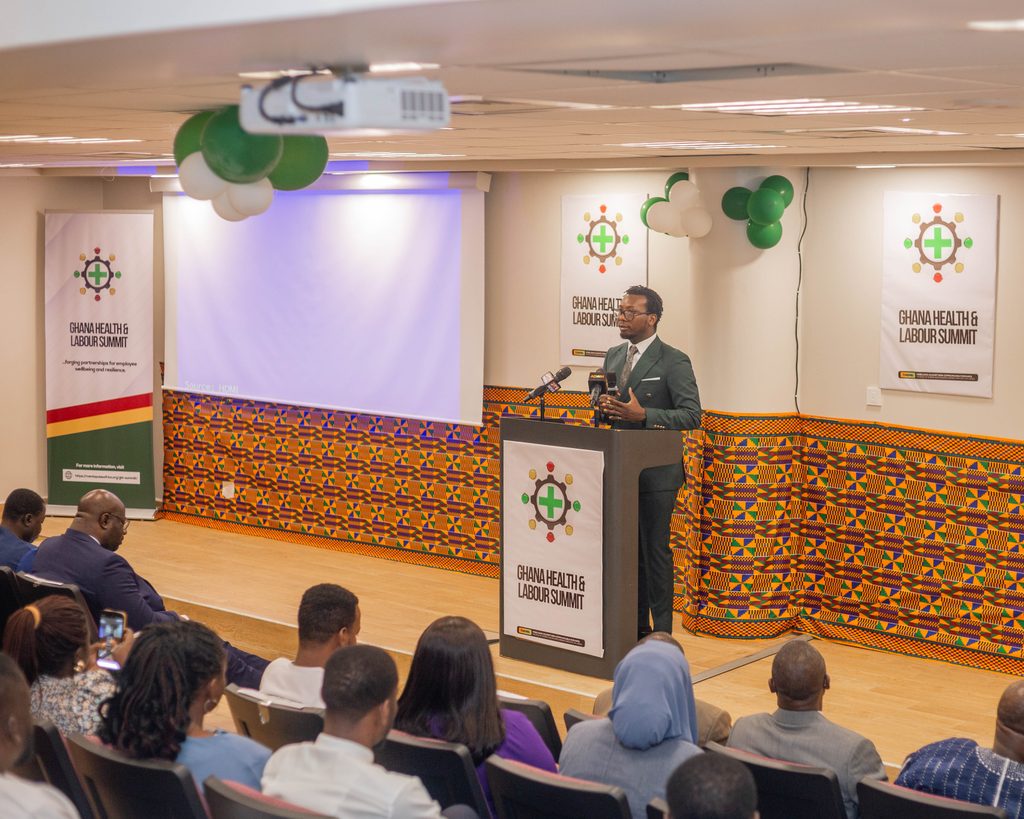
Executive Director of MentaPulse Africa, Manuel Koranteng, stresses that retention is not just about migration. “Talent retention is too often treated as a recruitment or migration issue when, in reality, it is a workplace issue. People make decisions about whether to stay based on the entire experience of work – how they are led, how they are rewarded, whether they can grow, whether their wellbeing is protected and whether they can see a future for themselves.”
Beyond the talk, this year’s summit is seeking to prioritize evidence-based solutions Prof. Damoah Obi Berko, Head of Organization and Resource Management at UGBS, explains: “The talent retention challenge requires evidence-led conversations and solutions that are grounded in the realities of Ghana’s workplaces. Our partnership with GHL Summit reflects our commitment to bringing the rigor of academic research, evidence and professional expertise to this important national conversation.”
Board Chair of MentaPulse Africa, Prof. Collins Badu Agyemang, adds: “Last year’s summit established an important foundation. This year, we are building on that foundation by confronting another critical dimension of the future of work – our ability to attract and develop the talent Ghana needs.”
The two-day summit, scheduled for October 8–9, 2026 at the University of Ghana Business School (UGBS) in Accra, will feature keynote addresses from government and industry leaders, panel discussions on workplace wellbeing and career development, interactive workshops, a job fair, exhibitions, an awards ceremony, a gala dinner, and hybrid live streaming for wider participation.
For professionals like Amina, summits like these must go beyond talk shops, offering employers concrete, actionable steps to help Ghana retain its most talented workforce.