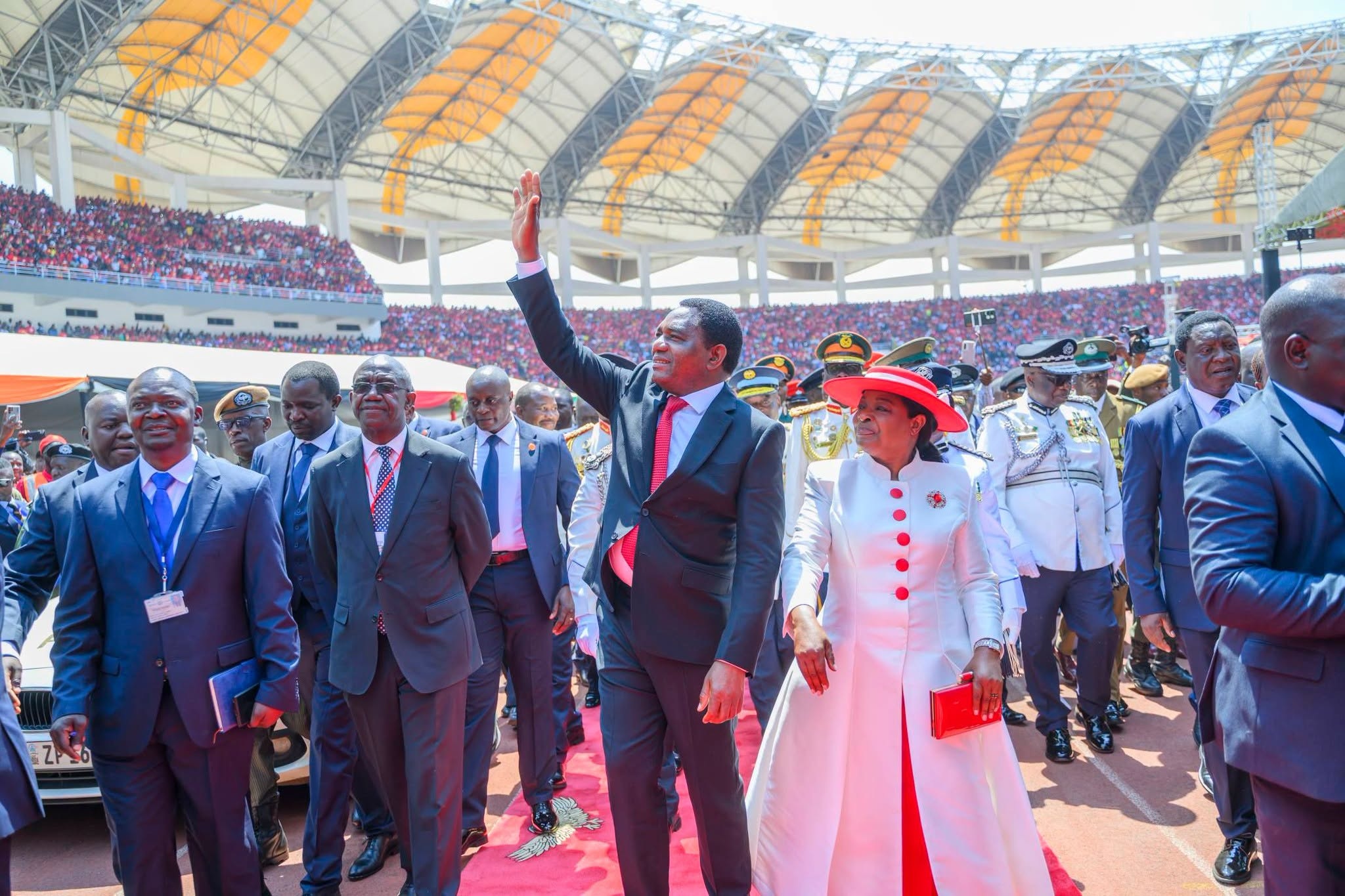
President Hakainde Hichilema was sworn in Tuesday for a second five-year term following a contentious election that saw his main rival arrested on treason charges.
Hichilema, credited with stabilizing Zambia’s economy during his first term, won the August 13 election with 60% of the vote, according to official results.
His closest challenger, Brian Mundubile, received 38% and alleged the outcome had been manipulated. He was unable to file a legal challenge after courts were sealed off on the final day for petitions.
During the inauguration ceremony in Lusaka Hichilema pledged to deepen reforms in education and health.
“Education remains the greatest equalizer, best investment and indeed inheritance that we can pass on to our children,” Hichilema said. “Education gives them a lasting sense of value and protection for whatever else they are left with.”
The president highlighted achievements from his first term, including the introduction of free education, which he said brought 2.6 million learners back to school. Under his “Go Zambia Agenda,” Hichilema promised to build on those gains, ensuring equal access to opportunities for all citizens.
But the election aftermath has been fraught with controversy. Security forces raided a Lusaka property linked to Mundubile the day after the vote, killing a former cabinet minister and arresting several opposition politicians. Mundubile himself was later detained on treason charges, a move that has drawn criticism from rights groups.
Amnesty International condemned the arrests, warning they risked undermining democratic freedoms. The Southern African Development Community (SADC) noted that polling day was largely peaceful but urged authorities to address concerns about transparency.
European Union observers also reported irregularities in tallying centers, including delays in recording results and weak verification between digital and paper records. They also cited frequent pauses in proceedings while officials awaited instructions from headquarters.
Despite the controversy, Hichilema was optimistic about his second term, promising to scale up investment in skills development and healthcare.
“Our renewed mandate is about building on the progress we have made and ensuring that every Zambian has the tools to thrive,” he said.
The disputed election underscores the challenges facing Zambia’s democracy, where opposition figures have often accused the government of using state institutions to stimulate dissent. Observers say the coming months will test Hichilema’s ability to balance reform with political inclusivity.