The United States pledged Wednesday to help Kenya build a critical minerals processing industry, underscoring intensifying rivalry with China over access to Africa’s vast deposits of rare earths, copper, and cobalt.
“Critical minerals are a top priority for President Donald Trump and Secretary of State Marco Rubio, and we are ready to work with Kenya as it becomes a regional leader in this space,” Frank Garcia, assistant secretary of state for Africa, told a meeting of the American Chamber of Commerce in Nairobi. He added: “We are ready to help you build a mining sector that is transparent, attracts legitimate businesses, respects communities and helps secure global supply chains.”
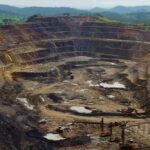
Kenya is weighing bids to develop the Mrima Hill deposit, estimated to hold tens of billions of dollars’ worth of rare earths and niobium, a metal vital for aerospace manufacturing. President William Ruto welcomed U.S. support, saying local processing would create jobs and strengthen Kenya’s industrial base. “We are accelerating the responsible exploration and development of rare-earth elements, titanium, graphite, lithium, niobium and other strategic resources,” Ruto said.
The U.S. International Development Finance Corporation is backing a pipeline of African rare earth projects as Washington seeks to reduce dependence on China, which dominates global supply chains. Garcia criticized competitors who “pull minerals out of the ground, whisk them offshore and capture all value addition far away from the lands from which the minerals originated.”
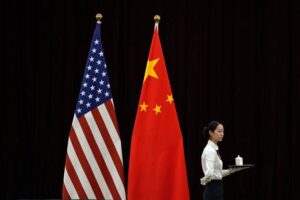
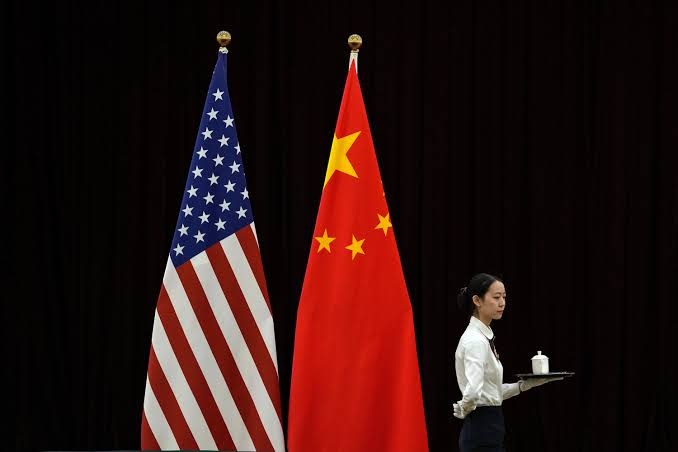
China, meanwhile, has tightened its grip. Just weeks before a planned Trump–Xi summit, Beijing expanded restrictions on rare earth exports, with phased rules taking effect Nov. 8 and Dec. 1.
“It is an exercise in economic coercion on every country in the world,” U.S. Ambassador Jameison Greer said, warning the measures could give China control over “the entire global economy and the technology supply chain.”
The rivalry is most acute in the Democratic Republic of Congo, home to more than 70 percent of the world’s cobalt and vast copper reserves. U.S. and Chinese firms are locked in a battle for control of major mining assets, with Washington pressing for transparent partnerships and Beijing accused by critics of leveraging opaque deals to secure long-term supply.
Armed groups such as M23 have exploited the competition, seizing mineral-rich territories and fueling instability.
Analysts say Africa’s mineral-rich nations must act decisively to avoid being reduced to battlegrounds for external powers. “The danger is that African governments become pawns in a geopolitical chess game, with little benefit flowing to their citizens,” said a Nairobi-based economist. Experts urge leaders to insist on local processing, stronger governance, and regional cooperation to capture more value from resources.
For Kenya, Ghana, the DRC and others, the stakes are high. Despite abundant deposits, millions remain poor, illustrating the so-called “resource curse.”
With global demand for critical minerals surging, African leaders face a historic opportunity to rewrite the rules or risk repeating past mistakes.