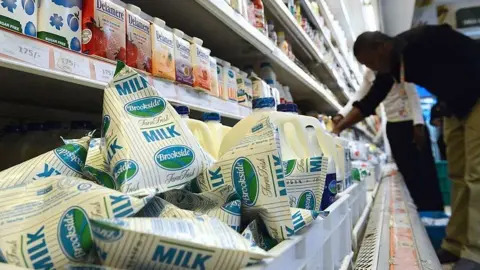
Kenya is importing milk from neighboring countries to bridge a domestic shortage, Trade Cabinet Secretary Lee Kinyanjui confirmed Saturday.
“We are actually importing milk from neighboring countries like Uganda, and we believe that this is not where the country should be,” Kinyanjui said in Nakuru.
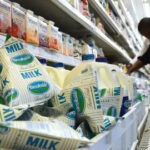
The admission comes as the Kenya Dairy Board (KDB) reports reduced stock levels, delays in replenishing outlets, and limited availability of some brands. Pasteurized milk has been hardest hit, while long-life varieties such as ESL and UHT remain more accessible.
Deliveries to processors fell 3.7 percent from 84.4 million liters in June to 81.3 million liters in July, with preliminary August figures showing further decline. KDB attributes the drop to dry and cold conditions in key producing areas, which have reduced pasture and fodder.
Agriculture and Livestock Development Cabinet Secretary Mutahi Kagwe linked the shortage to climate change.
“Kenya as you know is the largest processed milk producer in Africa. But even the neighboring countries that we can import from; Tanzania, Uganda, and so on, are also themselves experiencing problems because of the same unpredictable climate changes,” Kagwe said.
Despite the crunch, KDB expects recovery as rains improve pasture availability during the October-December season.
The government is distributing milk coolers and subsidizing sexed semen to strengthen dairy herds and boost production.
Kinyanjui emphasizes the long-term goal of self-sufficiency.
“We are asking our farmers, and we will support you to ensure that you can produce enough for the nation to achieve self-sufficiency,” he said.
Kenya recently overtook Egypt as Africa’s largest milk producer, now producing about 5.4 billion liters annually, up from 4.6 billion. Growth has been driven by a larger dairy herd, improved farming methods, and better productivity.