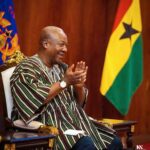
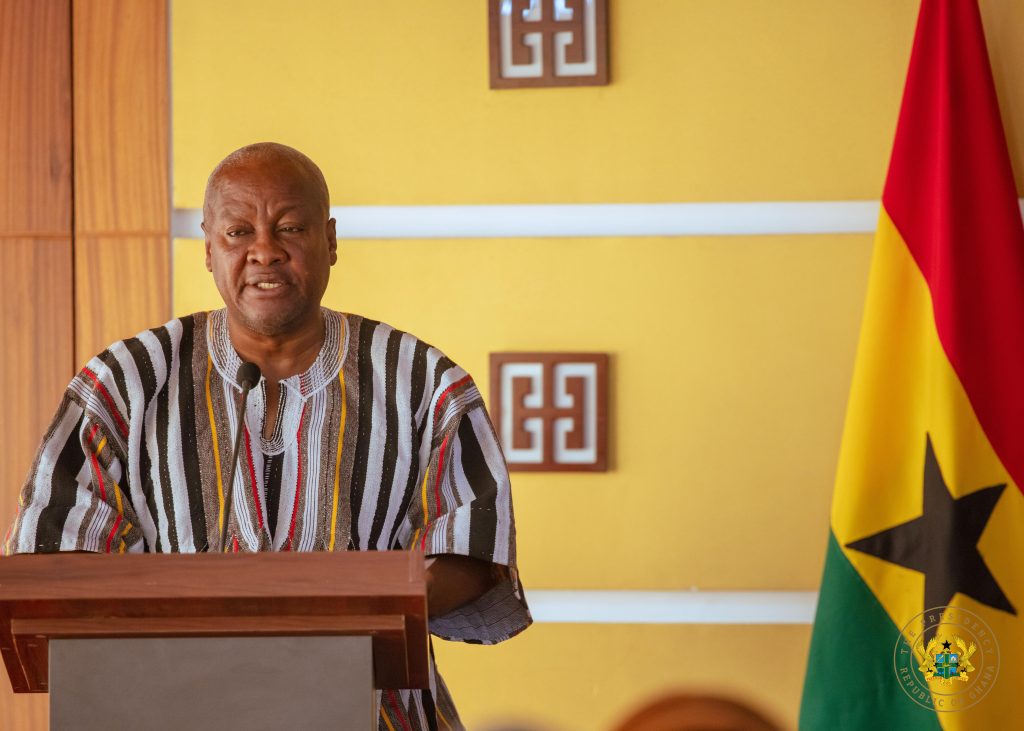
President of Ghana, John Mahama is hoping the country’s current extended credit facility with the International Monetary Fund (IMF) will be its last.
Ghana has approached the IMF for financial bailouts at least 17 times, with the last in 2023.
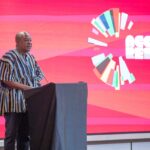
Speaking at an annual New Year School and Conference at the University of Ghana, John Mahama said the country is aiming to end its requests to the financial institution after exiting the program at the end of 2026.
“We’ll emerge from the extended credit facility with the IMF towards the end of this year, and it is my hope that this will be the very last time we will ever go for a bailout from that International Monetary institution. It must be the 17th and the last time that Ghana goes for a bailout from the IMF,” he noted.
In place of external support, the Ghanaian president said the country is strengthening domestic revenue mobilization, restoring fiscal discipline, rebuilding confidence in the financial sector and supporting indigenous enterprises to grow.
Ghana signed a new bailout program with the IMF worth $3bn over three years to help ease the economic pressures described as its worst in a generation.
The West African nation, one of the world’s biggest producers of both gold and cocoa, was plunged into an economic distress attributed to the combined effects of the global Covid pandemic and the war in Ukraine.
The country’s debt was nearly 90% of the total annual value of its economy with loan repayment default and inflation at 41%.
John Mahama, who was elected president in 2024 pledged to restore the country to an irreversible economic path.
“Ghana stands at a defining crossroad: After nearly 7 decades of independence, the question before us is no longer whether we can govern ourselves, but how well we govern, how equitably we grow, how sustainable our growth is and how resilient we can build our nation.
“I’ve pledged to raise our economy and governance to a level that no succeeding government can reverse,” he noted.
The country’s inflation eased to a 4-year low in December 2025 to 6.3% with the local currency appreciating by 41% against the dollar by the end of 2025, the first time it has risen since at least 1994.
Ghana is one of 47 African countries including Cameroon, Tanzania, Kenya, Cote d’Ivoire, and Egypt with debts at the IMF.