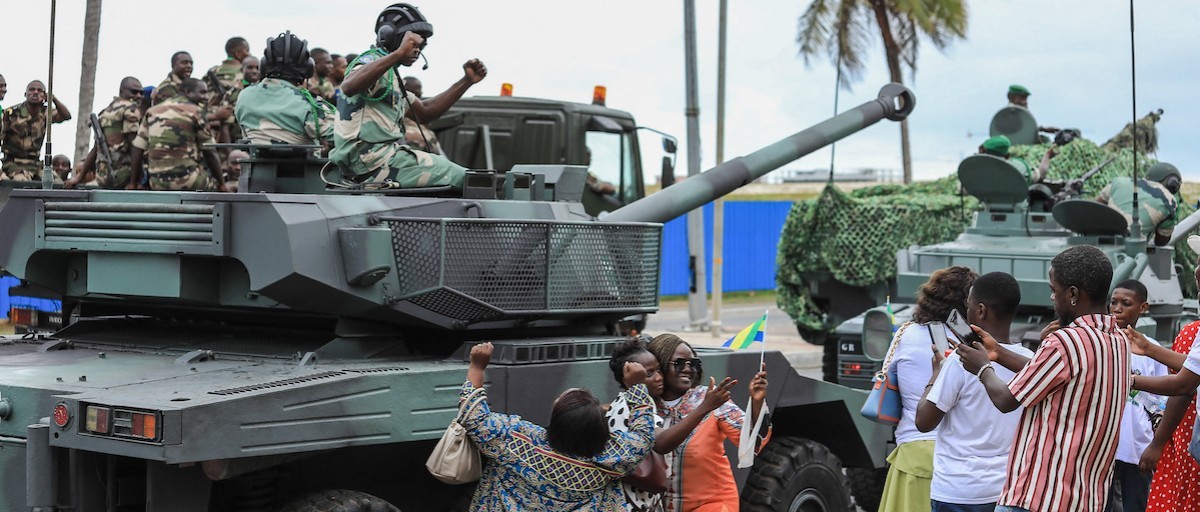
The Economic Community of West African States (ECOWAS), declared a state of emergency on December 9, 2025 as the West African subregion face a wave of military takeovers.
The declaration comes days after the bloc deployed a regional standby force to help stabilize the security situation in Benin following an attempted coup d’etat.
The coup, which lasted for 12 hours, from midnight to noon on December 7, 2025, was neutralised after several state and international actors intervention.
A short-lived coup
On Sunday, December 12, a group of soldiers stormed Benin’s state broadcaster to announce a coup. The soldiers declared a dissolution of the constitution, surrounded the presidential palace and declared the the presidency of Patric Talon over.
Sporadic gunshots were heard in Cotonou, where the presidential palace is located as fear seeped through the nation.
The group, calling itself the Military Committee for Refoundation cited corruption, neglect of frontline soldiers battling jihadists in the North, deteriorating security, unfair promotions within the army and the silencing of political rivals, as reasons for the mutiny.
However, by Midday of December 12, Benin’s Interior Minister Alassane Seidou in a statement said “in response to this situation, the armed forces of Benin and their leadership, true to their oath, retained control of the situation and foiled the manoeuvre,” declaring that the attempt by a “small group of soldiers” was over.
President Patric Talon, later in a televised address assured the situation was “completely under control,” vowing to punish the “rogue soldiers.”
Regional solidarity
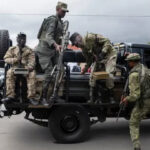
Benin’s eastern neighbour, Nigeria, in a quick response sent armed forces on the invitation of the Benin government to help defend and protect “constitutional order.”
Apart from Nigeria’s troops, ECOWAS sent additional troops from Ghana, Ivory Coast, and Sierra Leone to “support the Government and the Republican Army of Benin to preserve constitutional order and the territorial integrity of the Republic of Benin.”
The African Union in a swift response also affirmed support to Patric Talon as the “legitimate authority” of the Republic of Benin, assuring of its readiness to coordinate the full restoration of normalcy and the strengthening of democratic institutions.
What is really happening in West Africa?
Since 2020, 5 out of 16 West African nations, have had successful coup d’etats and are under military leadership.
Mali since August 2020, Niger since July 2023, Burkina Faso since January 2022, Guinea-Bissau since November 2025 and Guinea since September 2021.
In the case of Guinea, an election is scheduled to be held on 28 December 2025 to complete a transition to democratic governance, however, coup leader, Mamady Doumbouya is on the ballot.
ECOWAS Commission President, Omar Touray, believes West Africa now faces an “average high-risk” security rating.
He attributes the rising coup attempts to stalled political transitions, growing electoral exclusion, geopolitical pressures and insecurity as triggers of the recent coup wave.
According to the Institute for Security Studies (ISS), motivation for the recent wave of coups include “manipulation of national constitutions for presidential term extensions, rigged elections, deteriorating security and a rising anti-colonial sentiment.”
Will a state of emergency address the coup wave?
President Omar Touray believes “events of the last few weeks have shown the imperative of serious introspection” on the future of West African democracy.
With this state of emergency declaration, ECOWAS is aiming to protect and restore democratic governance in West Africa, enhance security in the region, solidify its credibility and responsiveness and promote collective action, particularly with Civil Society involvement.
“We confront formidable challenges, waves of unconstitutional power grabs, surging violent extremism, widening economic divides, climate crises, and intensifying geopolitical rivalries. ECOWAS knows all too well that no single actor—be it governments or regional institutions—can prevail alone,” ECOWAS Commissioner for Political Affairs, Peace and Security, Amb. Dr. Abdel-Fatau Musah noted.
“Lasting victories demand the vibrant mobilization of civil society organizations (CSOs), partnering with all stakeholders to defend peace, champion inclusive governance, and propel sustainable progress,” he added.
But will the regional bloc be able to achieve ‘lasting victories’ and how soon?