The African Union Commission has joined Rwanda in marking thirty-two years since the slaying of at least one million people in Rwanda in what is widely described as the 1994 Genocide against the Tutsi.
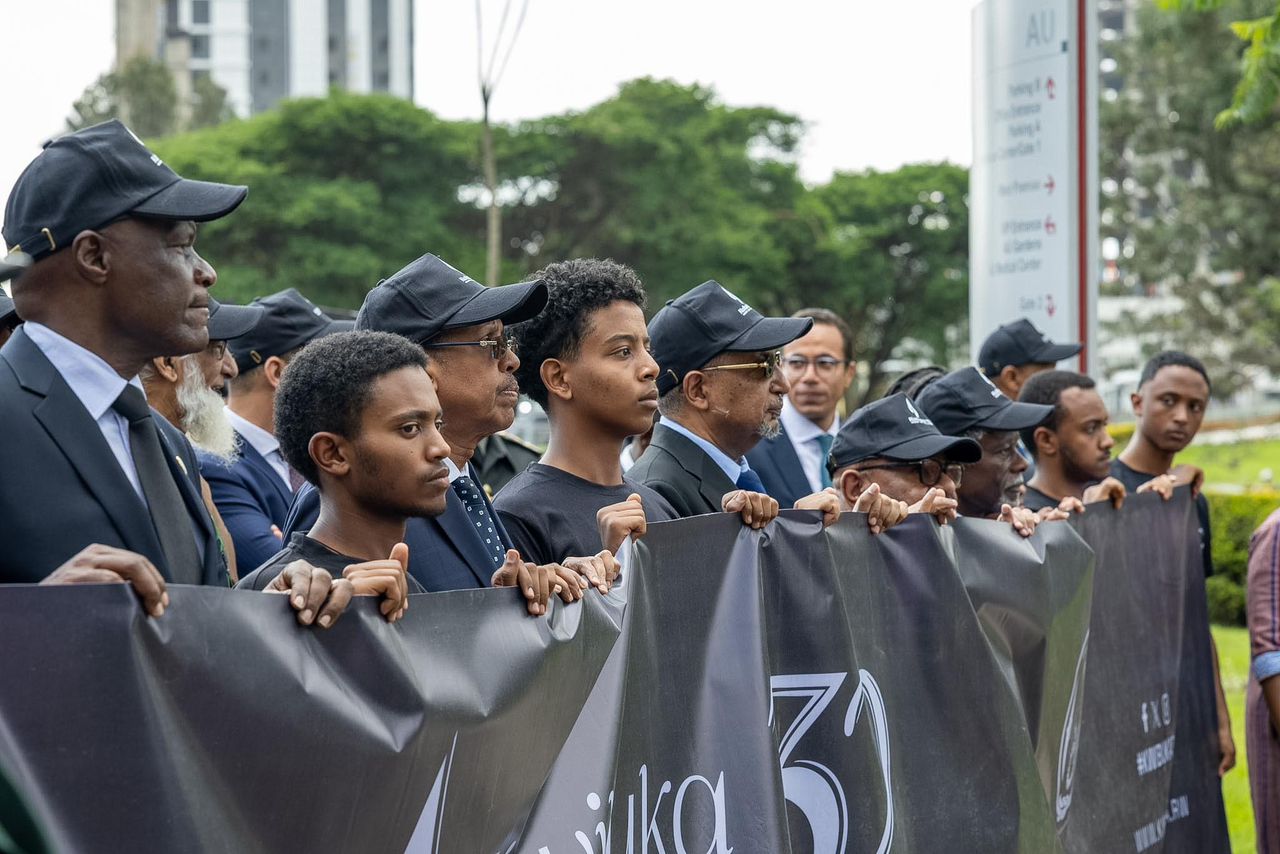
Commemorations at the AU headquarters focused on remembrance, resolve and renewed commitment to ensuring that genocide never happens again.
“Remembrance obliges us to act, to prevent, & to defend human dignity everywhere. Africa stands firm for peace, justice, & the protection of all,” AU Commission Chairperson Mahmoud Ali Youssouf said during the commemorative event.
The International Day of Reflection on the 1994 Genocide against the Tutsi in Rwanda also known as Kwibuka remembrance period, is observed by Rwandans and supporters worldwide, and has evolved into an international moment of reflection.
Both the UN and UNESCO dedicate the day as a reminder to commit to promote education about genocides to sensitize learners for the causes, dynamics and consequences of such crimes and to strengthen their resilience against all forms of discrimination.
Within 100 days in 1994, Rwanda was torn apart by a genocide that left the country divided, with millions displaced and traumatized.
“We remember over one million lives lost to hatred, indifference, and inaction. Kwibuka is not only a moment of mourning, but also a call to truth, responsibility, and vigilance,” Youssouf said.
Through national dialogue, community‑based justice mechanisms such as Gacaca courts, and deliberate policies promoting unity over ethnic division, Rwanda has focused on rebuilding not only its infrastructure but its social cohesion.
Today, the country is among Africa’s fastest‑growing economies, with progress in healthcare access, education, women’s representation in leadership, and public service delivery.
For the AU Commission Chairperson, this transformation is a source of inspiration for the entire continent.
“Rwanda’s remarkable journey of resilience and renewal reminds us that history is not fate; it is shaped by the will of people,” he said.
“Africa affirms never again will organized hatred be allowed to become a political project,” Youssouf added, warning against the resurgence of hate speech, polarization and divisive narratives on the continent.
The day in Rwanda is marked with the President lighting the flame of remembrance at the Kigali genocide memorial, a national walk to remember in the evening and a ban on activities that fosters competition and brings laughter.