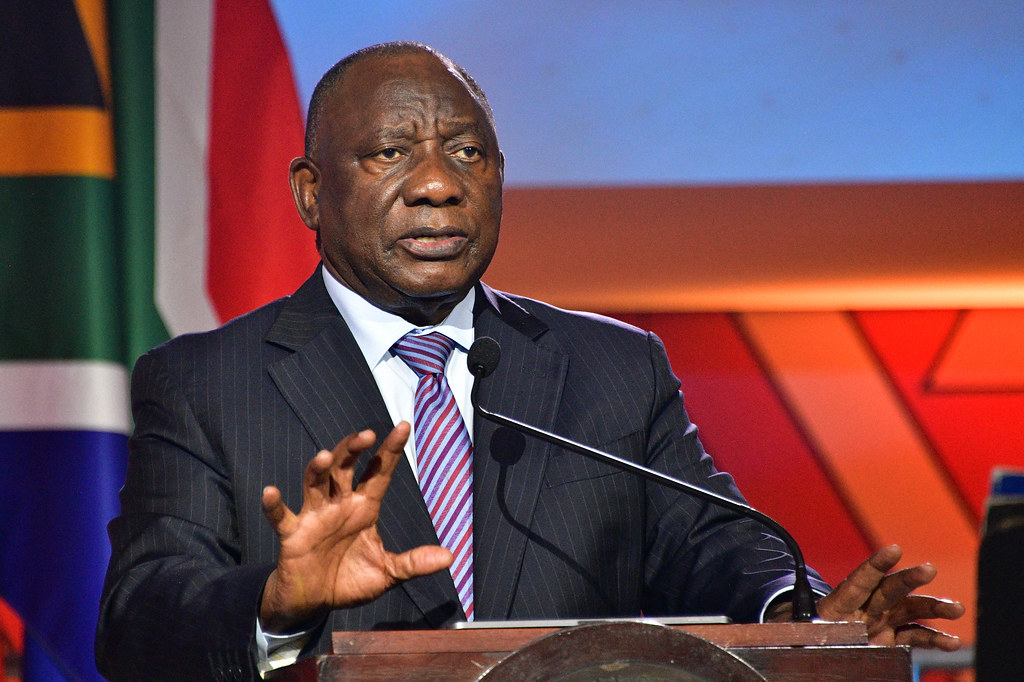
South African President Cyril Ramaphosa has backed calls for reparations, describing it as a necessary step toward healing historical injustices.
Speaking on recent developments, Ramaphosa said South Africa was “now taking very clear definitive steps to work on the reparations process,” adding that the UN’s declaration of the enslavement of Africans as a crime against humanity validated recommendations made decades earlier by South Africa’s Truth and Reconciliation Commission (TRC).
“Our people expect reparations so that it can heal the wounds of the past,” he said, describing reparative justice as central to confronting the legacy of apartheid and colonialism.
The president’s comments come in the wake of a historic vote at the UN General Assembly on March 25, 2026, when member states adopted a Ghana-led resolution formally declaring “the trafficking of enslaved Africans and the racialized chattel enslavement of Africans” as the gravest crime against humanity and calling for reparations as a concrete step toward remedying historical wrongs.
The resolution, tabled by Ghana with backing from the African Union (AU) and Caribbean states, passed with 123 votes in favor, three against: the United States, Israel and Argentina, and 52 abstentions, including the entire European Union bloc.
While UN General Assembly resolutions are not legally binding, experts believe they carry significant moral and political weight and are widely seen as setting the tone for future international action.
Ramaphosa linked the UN decision directly to South Africa’s own transitional justice process. The country’s TRC, established in the mid‑1990s to address atrocities committed under apartheid, recommended reparations and rehabilitation for victims of gross human rights violations.
While some measures were implemented, critics and victims’ groups have long argued that reparations were partial, delayed or insufficient.
“The United Nations has confirmed that reparations were the correct approach,” Ramaphosa said, noting that the TRC’s findings were “on point.”
He added that South Africa is now focusing on policy implementation to “deal with the past,” presenting the country as a leader in translating moral commitments into concrete action.
Following the General Assembly vote, the African Union has called for attention to shift to implementation and follow‑up mechanisms, largely driven by civil society groups on the continent.
In a five-point suggestion, the AU believes after the recognition must come dialogue and advocacy, reparatory justice initiatives, education as well as coalition building.
It calls for the establishment of scholarships, community programs and cultural restitution initiatives across the continent.